


Telegram tap-to-earn games are Mini Apps that reward users with in-game points or tokens for tapping the screen, completing tasks, upgrading characters and inviting friends. In some projects, these rewards can later be converted into cryptocurrency and withdrawn after the token launches.
In this article, we explain how Telegram tap-to-earn games work, which Mini Apps are popular, whether users can make money from them and how their tokens are earned and withdrawn.
Tap-to-earn is only one segment of the broader “free crypto” market. Beginners can also explore faucets, airdrops, bounty campaigns, referral programs, and Web3 games in our free crypto guide.
How Do Telegram Tap-to-Earn Games Work?
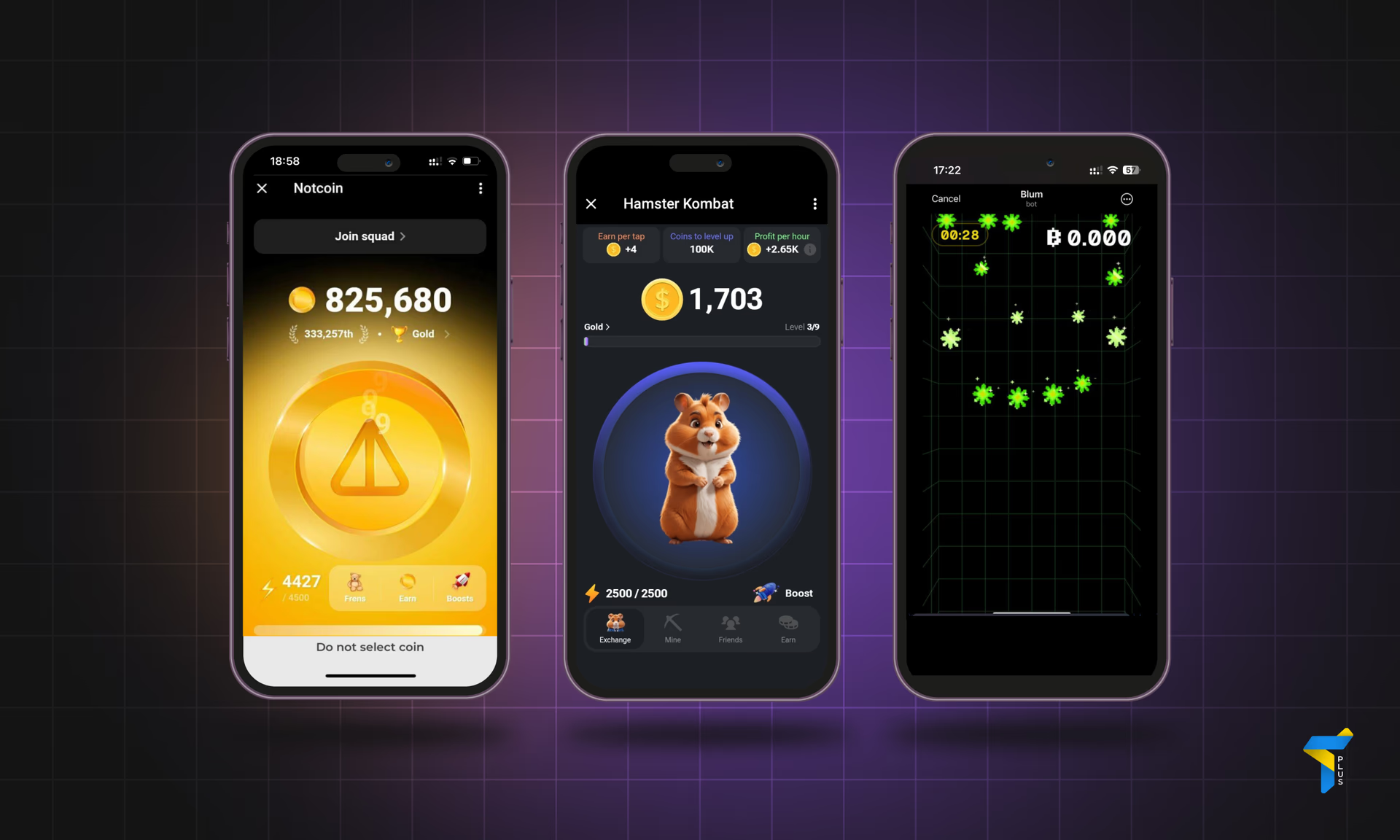
Tap-to-earn games became widely popular in early 2024, largely due to Notcoin. Initially, users collected in-game coins by tapping their smartphone screens. These coins were not yet cryptocurrency, but players’ progress was later used to calculate rewards in NOT after the token launched.
The success of Notcoin encouraged the launch of numerous similar projects. Most Telegram tap-to-earn games follow a comparable model:
- The user opens the game through a Telegram bot or Mini App.
- They complete simple actions such as tapping or swiping the screen, finishing tasks, upgrading characters or inviting friends.
- They receive in-game points, coins or other rewards.
- If the project launches its own token, the accumulated points may be considered when token rewards are distributed.
- Rewards can only be exchanged or withdrawn after the project enables this option.
Notcoin was followed by other popular Telegram games and Mini Apps:
- Hamster Kombat — a game in which users manage and upgrade a virtual crypto exchange as a hamster CEO.
- Blum — a Telegram-based crypto ecosystem that combines trading tools with gamified mechanics and rewards.
- Pixelverse — a Telegram gaming ecosystem featuring characters, tasks, progression and player battles.
Supporters view tap-to-earn games as an accessible way to introduce a wider audience to Web3, cryptocurrencies and blockchain technology. Critics, however, point to the questionable economic models of some projects and the lack of guaranteed value for in-game rewards.
The popularity of tap-to-earn games has demonstrated how gamification can attract new users to cryptocurrencies. However, GameFi is still evolving, and the long-term impact of this format on the crypto industry remains difficult to predict.
How much money can you make from tapcoins?
Earnings from tap-to-earn games can vary significantly depending on several factors:
- The popularity and mechanics of the game;
- Automation and boosts;
- The state of the cryptocurrency market.
It is worth noting that many tapgames do not yet allow the sale of earned tapcoins, as there has been no official release of tokens on exchanges. In those projects where selling is already possible, the income largely depends on when you joined the game and how actively you played.
For example, in one of the popular tapgames, some players were able to earn more than 100 000 dollars, but these are exceptions rather than the rule. Most active participants earned between 100-500 dollars for a few months of active play. Such results are achieved through daily activity, use of all available bonuses and effective application of the referral system.
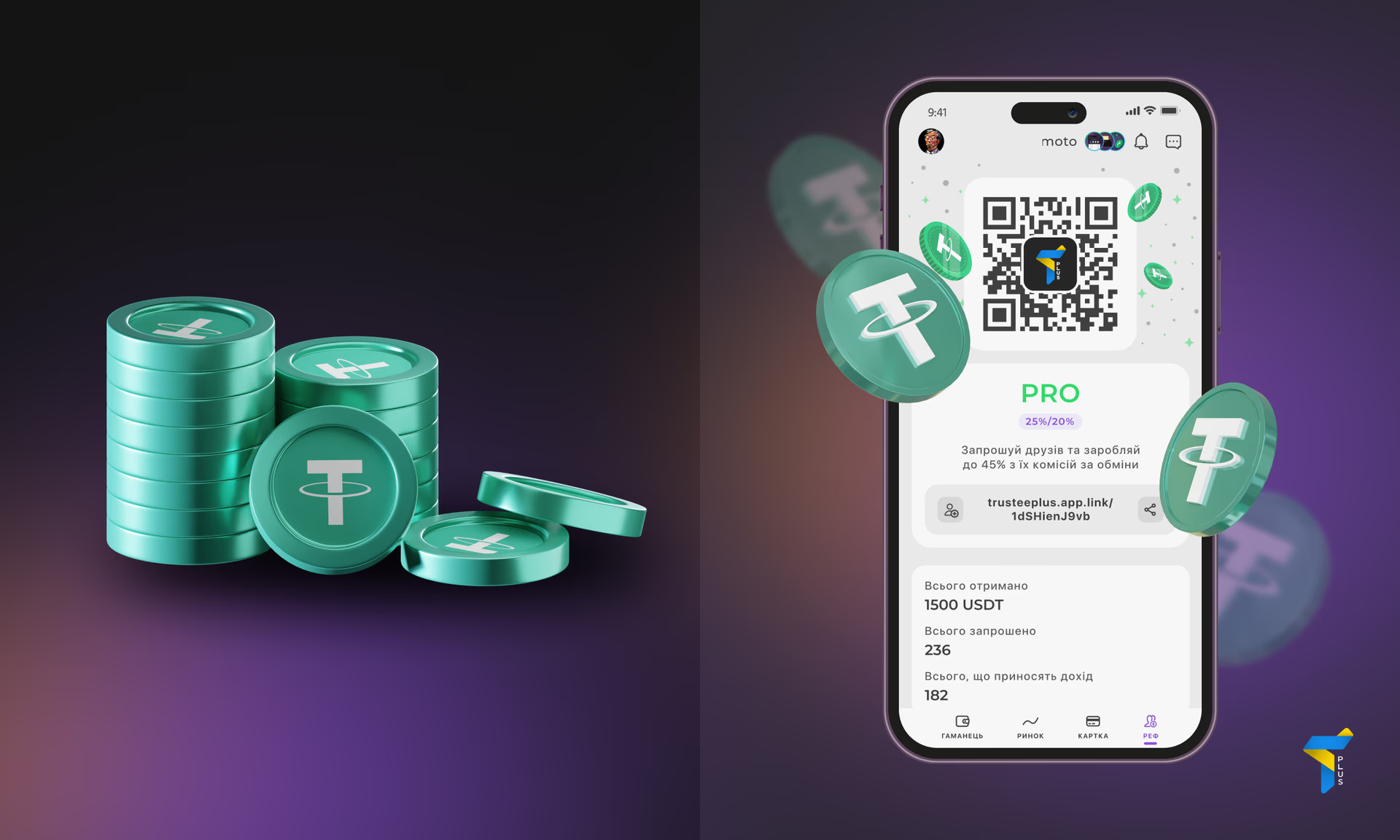
For those who are looking for more stable and potentially profitable opportunities in the cryptosphere, it is worth paying attention to referral programs of reliable exchanges and crypto wallets. For example, Trustee's referral program offers the opportunity to earn up to 45% of the platform's revenue, which is much higher than the potential earnings from most tap-to-earn games.
More information about this program can be found at this link.
Popular Tap-to-Earn Games on Telegram
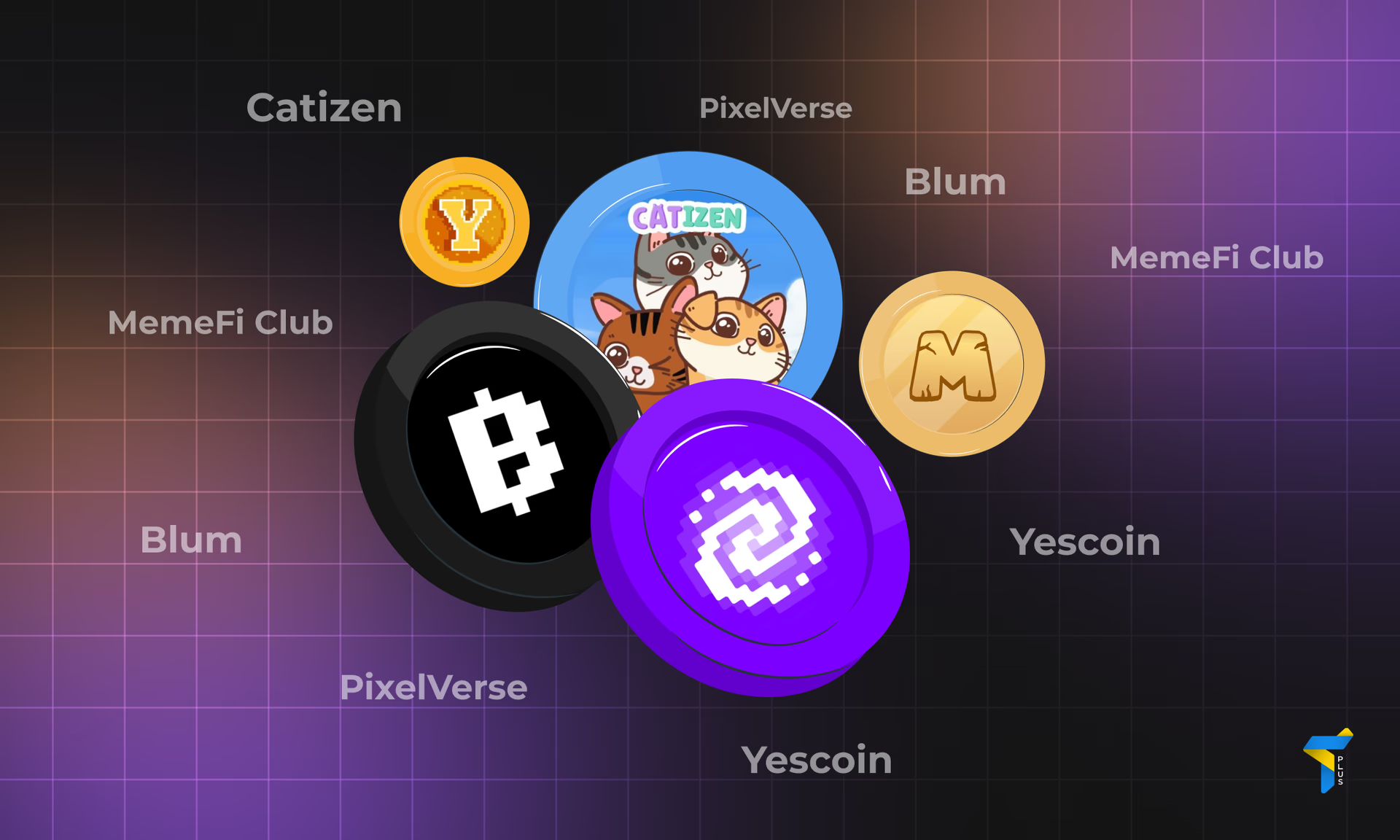
The following is not a ranking of the most profitable games but an overview of well-known Telegram projects associated with the tap-to-earn model. Their current status varies: some have already launched tokens, while others have evolved into broader gaming or trading ecosystems.
- Pixelverse is a Telegram gaming ecosystem featuring characters, tasks, battles, tournaments and leaderboards. Its PIXFI token is used for in-game activities and interaction with products across the ecosystem.
- Catizen is a cat-themed gaming ecosystem that grew from a Telegram game focused on developing characters and completing tasks. The project has launched the CATI token, which is used across Catizen games and other ecosystem products.
- Yescoin is a Telegram Mini App based on swipe-to-earn mechanics. Users swipe the screen to collect in-game coins, complete tasks and participate in promotional activities. These coins should not automatically be treated as cryptocurrency: the ability to receive or withdraw tokens depends on the project’s official terms.
- Blum started with a system that allowed users to collect Blum Points but later evolved into a broader Telegram-based crypto ecosystem. The platform now offers trading tools, Memepad, a trading bot and the BLUM token.
- MemeFi became popular as a game featuring character battles and clan-based mechanics. The MEMEFI token has already launched, and in 2026 MemeFi was acquired by Catapult Trade, meaning its further development is now connected to a new ecosystem.
Tap-to-earn games have demonstrated how gamification can attract millions of users to Telegram Mini Apps and cryptocurrencies. However, they do not provide a stable income: in-game points are not always converted into tokens, and a token launch does not guarantee that the token will have significant value.
Before participating, users should check the project’s current rules through its official resources, confirm whether rewards can be withdrawn and review the permissions requested by the Mini App or connected crypto wallet. Tap-to-earn games are best viewed primarily as games and promotional campaigns rather than a predictable way to make money.