

Blockchain technology and its derivative, cryptocurrency, have given people the freedom to manage their money independently — owning it 100%, transferring it anywhere in the world without banking restrictions, investing, spending, or multiplying their assets.
The answer is a free online AML check, the result of a joint effort between crypto platforms and regulators from various countries. Today, we will discuss it in detail.
Key Takeaways
- AML checks for cryptocurrencies help assess whether an address, transaction or source of funds is linked to fraud, money laundering, sanctioned services, hacks or other illegal activity.
- “Dirty” cryptocurrency is technically no different from “clean” cryptocurrency inside the blockchain, but it may be linked to addresses from sanctions lists, darknet marketplaces, mixers, stolen funds or suspicious services.
- Risk Score shows the risk level of an address or transaction: the stronger the connection with suspicious sources, the higher the likelihood of an additional check, delayed crediting or blocking on centralized platforms.
- AML control mainly takes place outside the blockchain — at the level of exchanges, wallets, analytics services, payment providers and regulators. Some centralized tokens may be an exception, where the issuer can freeze funds at the smart contract level.
- To reduce the risk of receiving “dirty” assets, it is worth checking addresses through AML checkers, avoiding sanctioned and suspicious services, not accepting funds from unknown sources and using platforms that comply with AML and KYC procedures.


What is an AML Check and Why is it Necessary?
In 2009, Bitcoin appeared, followed by hundreds of other networks. For a decade, they operated with virtually no regulation (with rare exceptions). This lack of oversight allowed digital assets to be used in criminal activities (such as tax evasion, terrorist financing, and dark market transactions) without consequences, which also gave cryptocurrencies a bad reputation. It wasn’t until 2019 that things changed.
Three U.S. regulators — CFTC, SEC, and FinCEN — officially recognized cryptocurrency exchanges as financial institutions along with banks. From that moment, all AML rules outlined in the BSA were extended to cryptocurrencies.
The primary mechanism for enforcing AML in the crypto space became the online AML check for “dirty” funds.
What is “Dirty” Cryptocurrency and Why is it Dangerous?
One of blockchain’s core principles is transparency — every user can see every transaction ever made on the network. If someone knows an address owner, they can track all their transactions, including recipient and sender addresses, amounts, and other details.
In the context of AML, this enables comprehensive tracking of fund sources, making it an ideal tool for identifying wallets linked to criminal activities.
And ‘dirty’ cryptocurrency — this refers to any digital assets held at addresses included on regulators’ lists. These lists are compiled on the basis of investigations by law enforcement agencies in different countries and other responsible organisations. Thus, exchanges themselves can label external addresses as sources of tainted funds and assign them different Risk Score levels.
How Can “Dirty” Crypto Affect Users?
Even a single transaction can link your crypto address to blacklisted ones:
- Direct transfers: Also known as “dusting attacks,” where mass transfers of small amounts of tainted crypto result in widespread account restrictions.
- Indirect transfers: If you receive funds from individuals or services involved in crimes or failing to follow AML rules, such as the Tornado Cash crypto mixer.
This connection can lead to:
- Account and asset freezes (if using compliant exchanges and wallets).
- Fines and scrutiny from regulatory agencies.
How Long Does an AML Check Take?
Technically, “dirty” assets are indistinguishable from “clean” ones. There are no built-in blockchain tools for marking or blocking assets and addresses. However, centralized services enforce AML rules externally, such as crypto exchanges and wallet providers.
AML verification of assets can take anywhere from a few hours to several days, depending on:
- Complexity: High transaction volumes or long transaction chains require detailed analysis.
- Technical capabilities: Large, reputable platforms invest more in AML procedures.
- Legal considerations: Secondary checks may be required due to risk associations.
Which Services Are Considered Sanctioned
Here is a list of the most well-known sanctioned platforms according to AML standards. All assets from these services are considered “dirty” — Trustee Plus does not work with any of them.
- Tornado Cash — a major crypto mixer accused by the U.S. OFAC of laundering $7 billion over four years. It is the most well-known sanctioned service.
- Lazarus Group — a North Korean hacker group responsible for numerous hacks. It uses cryptocurrency to finance the DPRK regime.
- Garantex — a Russian crypto exchange that was added to sanctions lists in 2022 due to money laundering and other illegal operations related to cybercrime.
- Hydra — the largest darknet marketplace, which used digital assets for drug trafficking. It was shut down in 2022, and all its assets were frozen.
- ChipMixer — another crypto mixer whose main purpose was to hide the traces of “dirty” transactions by mixing assets from different crypto addresses.
- HTX (formerly Huobi Global) — one of the oldest centralized cryptocurrency exchanges, founded in China in 2013, which came under sanctions in 2026.
Stolen funds are also considered dirty. In this case, the platform from which the assets were stolen marks the addresses in the blockchain as risky, and all addresses connected to them through a chain of transfers are also flagged.
Can You Lose Your Crypto Due to AML Checks?
Yes. Even an accidental link to dirty crypto can get your wallet blacklisted, meaning your assets could be frozen.
According to HAPI Labs, if just 15% of your assets originate from illicit sources, your wallet may be frozen. In most cases, unlocking frozen funds is nearly impossible — receiving crypto from a sanctioned source is equivalent to losing it.
However, Trustee Plus users cannot lose funds — they will either be credited to the account or refunded. The only exception is if the assets are stolen and under investigation by law enforcement. In that case, Trustee Plus must hold the funds under a court order until resolved.
AML risks and smart-contract freezes are not the same thing, but they are closely connected in practice. If you work with stablecoins, it is useful to understand how to check a wallet for blacklist status at the smart contract level before accepting funds from an unfamiliar address.
How to Check if Crypto is “Clean”?
Blockchain transparency enhances trust in the system and helps maintain a lower percentage of illegal transactions than in fiat currencies.
However, “dirty” crypto addresses cannot be easily “cleaned”. Criminals use various laundering methods, such as:
- Mixing dirty funds with clean ones via crypto mixers.
- Swapping assets across blockchains that hide transaction history (e.g., Monero).
- Masking transactions as miner rewards or NFT sales.
AML procedures counter these tactics through:
- Transaction linkage analysis and fraud detection, increasingly using AI technologies.
- Certification of crypto services.
- Blacklist and whitelist tracking.
- KYC (Know Your Customer) verification.
To check crypto sources yourself, you can use:
- Blockchain analytics tools like Chainalysis, Elliptic, GetBlock, and CipherTrace.
- Blockchain explorers (e.g., EtherScan marks suspicious Ethereum addresses).
- Official regulatory lists, such as OFAC’s sanctions lists.
How to Avoid Crypto Freezes?
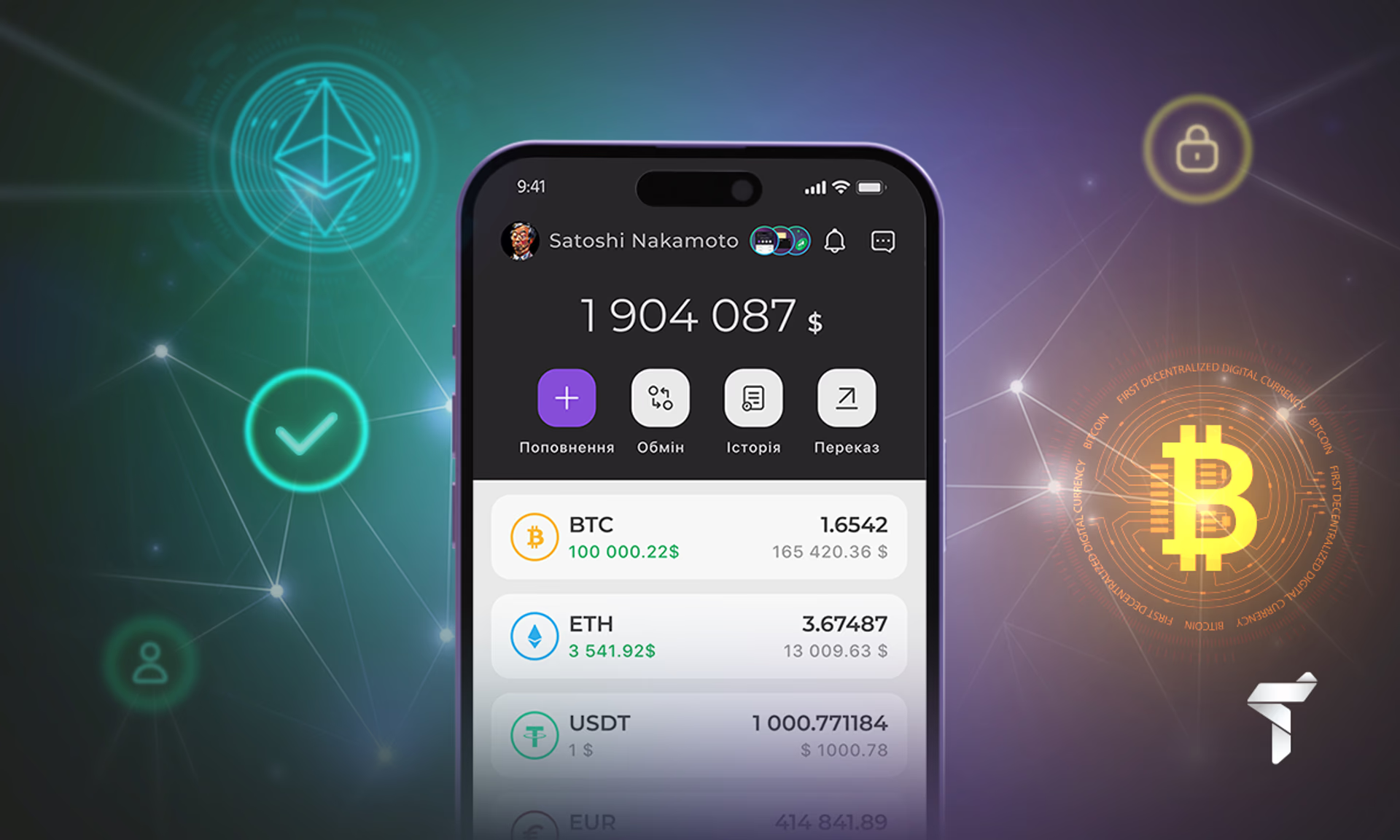
To prevent losing funds:
- Check your wallet using an AML checker before making transfers. Trustee Plus offers a free AML Check Bot!
- Verify fund sources through blockchain tracking tools.
- Avoid suspicious services, especially sanctioned platforms and gambling sites.
- Diversify your assets — use multiple wallets for different purposes to minimize risks.
The Ultimate Solution: Trustee Plus
The best way to avoid “dirty” crypto and asset freezes is to use trusted wallets and exchanges that comply with AML and KYC regulations.
Trustee Plus is one such solution — a crypto wallet with an integrated crypto card that ensures security.
Why Trustee Plus?
- Automated AML checks for all incoming transactions.
- Licensed as a Virtual Asset Service Provider (VASP), regulated under EU crypto laws.
- Encrypted personal data and access keys, secured with biometrics, PIN, and 2FA.
- Full compliance with KYC procedures, including verification via international documents.
FAQ — Frequently Asked Questions About AML Checks for Cryptocurrencies
What is an AML check for cryptocurrency?
An AML check for cryptocurrency is an analysis of an address, transaction or source of funds to identify links to money laundering, fraud, sanctioned services, hacks, darknet markets and other illegal activity. Such a check helps determine how safe it is to receive or send digital assets.
What does “dirty” cryptocurrency mean?
“Dirty” cryptocurrency refers to crypto assets linked to suspicious or sanctioned sources: mixers, stolen funds, darknet marketplaces, hacker groups, illegal services or addresses flagged by regulators and analytics companies. Even an indirect connection to such addresses can increase the transaction’s Risk Score.
Can “clean” cryptocurrency be distinguished from “dirty” cryptocurrency inside the blockchain?
At the technical level, “clean” and “dirty” assets usually do not differ inside the blockchain: the network does not mark coins as suspicious by itself. Risk assessment is carried out through external AML tools, analytics services, regulator databases and centralized platforms that analyze the history of fund movements.
How long does an AML check take?
An AML check can take from several hours to several days. The timeframe depends on the complexity of the transaction chain, the number of intermediate addresses, the quality of the service’s analytics tools, the presence of links to risky sources and the need for additional legal or manual review.
What happens if you receive cryptocurrency from a suspicious address?
If the funds are linked to sanctioned services, hacks, mixers or other risky sources, a centralized platform may delay crediting, request additional documents, conduct an enhanced review or temporarily restrict access to the assets. In particularly serious cases, the funds may be held until a decision is made by law enforcement authorities or a court.
How can you reduce the risk of receiving “dirty” cryptocurrency?
To reduce the risk, check addresses through AML checkers before making a transfer, avoid questionable exchangers, mixers, darknet services and sanctioned platforms, do not accept funds from unknown senders, and use crypto wallets or exchanges that follow AML procedures and check incoming transactions.