


In this article, we’ll take a detailed look at what ETFs are, their main types (spot and futures), and the specifics of investing in these funds. You will learn how ETFs can serve as an alternative to direct investments in cryptocurrencies, what risks and benefits they have, and how to choose the right fund for your investment strategy.
Key Takeaway
- ETFs and exchange-traded crypto products remain one of the easiest ways to gain exposure to the crypto market through familiar brokerage and exchange infrastructure.
- By 2026, this segment is no longer limited to Bitcoin and Ethereum: the market has expanded to include products linked to Solana, XRP and multi-asset crypto baskets, while the regulatory framework for spot crypto ETP listings in the U.S. has become more straightforward.
- At the same time, ETFs and ETPs are best suited for investors who value convenience, regulated access and not having to manage self-custody.


What is an ETF?
An ETF (Exchange-Traded Fund) is a fund traded on the stock exchange that combines assets from various categories (stocks, bonds, commodities, cryptocurrencies) and is traded like a regular stock. Investors use ETFs to diversify their portfolios and reduce risks without purchasing the underlying assets directly.
For instance, the S&P 500 ETF tracks the performance of the S&P 500 index, which includes 500 of the largest U.S. companies. A gold ETF, on the other hand, follows the price of gold and issues shares backed by physical gold reserves. Holders of such shares own an interest in the fund or trust, while the underlying asset itself is held by the fund, trust or its custodian.
Following the approval of spot Bitcoin exchange-traded products on January 10, 2024, and the launch of spot Ethereum ETFs in July 2024, investor interest in these products increased significantly. Another important catalyst came on September 18, 2025, when the SEC approved generic listing standards for commodity-based trust shares holding spot commodities, including digital assets. These standards streamlined the listing process for eligible products, although issuers still have to comply with securities-registration, exchange and disclosure requirements. Against that backdrop, the global ETF industry reached a new record of $23.08 trillion in assets at the end of May 2026.
What are Spot ETFs?
Spot ETFs are funds that reflect the current value of the assets they include, such as stocks, commodities or cryptocurrencies (e.g., Bitcoin, Ethereum). They allow investors to profit or lose based on market price changes, similar to directly owning the asset, but without requiring the investor to hold the asset personally.
What are Futures ETFs?
Futures ETFs are based on futures contracts rather than the actual assets. For example, instead of holding real Bitcoin, the fund purchases Bitcoin futures, speculating on its future price. This allows investors to take positions on an asset’s future value without buying it directly, although futures products may be affected by contract-roll costs and may not perfectly track the spot price.
How to Invest in ETF Funds
Investing in ETFs involves the purchase of shares or units of the fund or trust, i.e. exchange-traded securities that confirm the right of their owner to economic exposure to a corresponding share of the fund’s assets.
ETFs are bought and sold in brokerage companies or on authorized exchanges.
Direct investment in cryptocurrencies via Trustee Plus
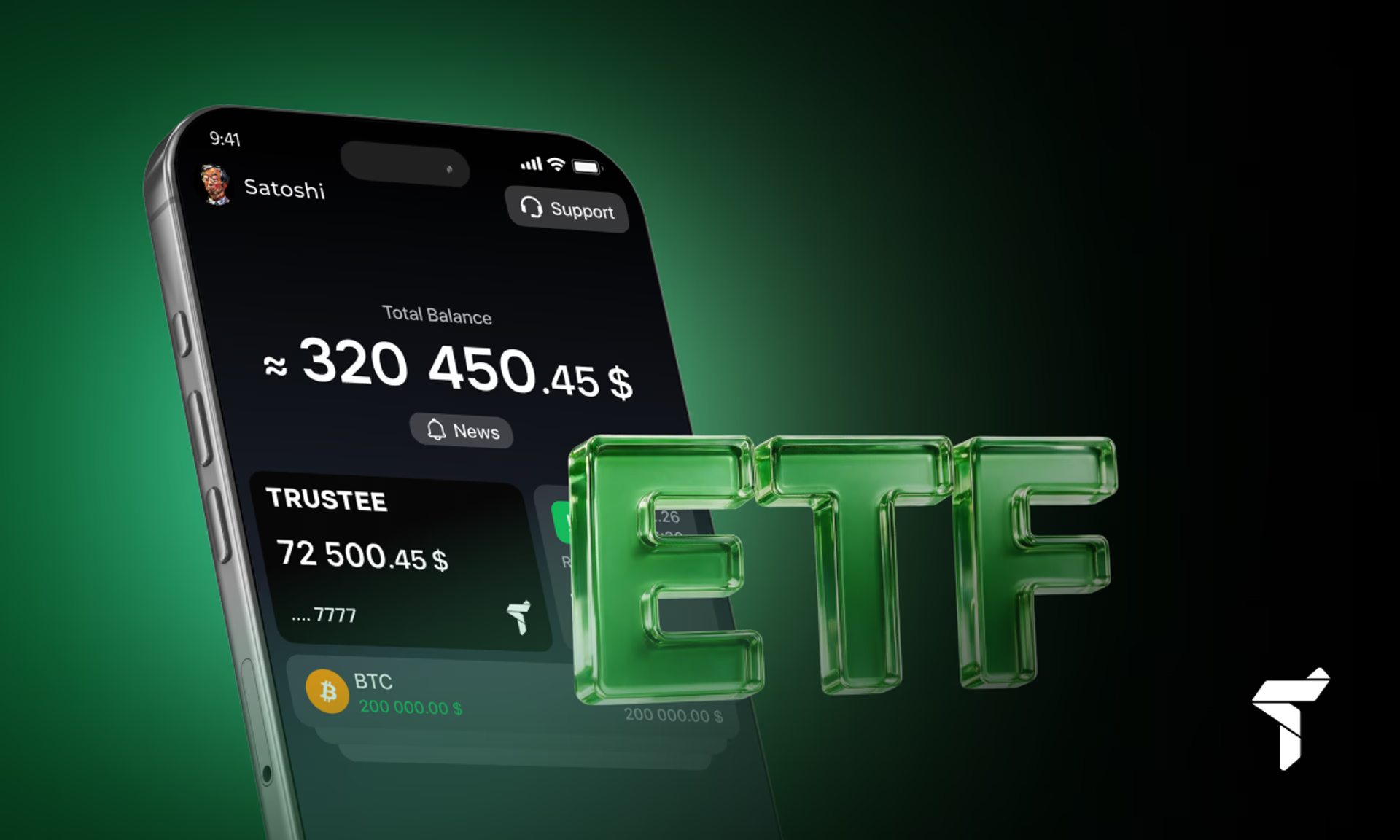
Direct investments in cryptocurrencies involve purchasing assets (such as BTC, ETH, etc.) and storing them in a crypto wallet. Trustee Plus offers users the ability to fund their wallet.
This allows investors to directly own cryptocurrencies and independently manage their assets.
Types of Spot ETFs
Spot ETFs and exchange-traded products reflect the current market value of an asset, making them attractive for long-term investments. There are several types worth discussing separately:
Spot Bitcoin ETF
Spot Bitcoin ETFs are investment funds or exchange-traded products that track the real market value of Bitcoin without using futures contracts. This means investors gain access to Bitcoin through an exchange-traded product that holds the actual asset or provides spot-backed exposure through a trust structure.
Among the first companies to receive approval for launching or converting spot Bitcoin ETFs and ETPs were BlackRock, Grayscale, ARK 21Shares, Bitwise, Fidelity, Franklin Templeton, Hashdex, Invesco Galaxy, VanEck, Valkyrie and WisdomTree. These funds began trading on major exchanges such as NYSE, Nasdaq and Cboe, making them accessible to a wide range of investors and allowing participation in Bitcoin’s price movements without direct self-custody.
Spot Ethereum ETF
Spot Ethereum ETFs track the market price of Ethereum and function similarly to spot Bitcoin ETFs.
Approval for these ETFs from the SEC came in May 2024 at the exchange-rule level, while trading in the first U.S. spot Ethereum ETFs began on July 23, 2024, after the relevant registration statements became effective. Early issuers included firms such as BlackRock, Fidelity, Grayscale, Bitwise, VanEck, Franklin Templeton, Invesco Galaxy and 21Shares. With this tool, investors can benefit from Ethereum’s price fluctuations without worrying about cryptocurrency storage or associated self-custody risks.
Spot Solana ETF
As of 2026, exposure to Solana through U.S.-listed exchange-traded products already exists. On October 28, 2025, Bitwise launched the Bitwise Solana Staking ETF (BSOL), which holds spot SOL and seeks to generate additional return through staking. Reuters described it as the first U.S. spot Solana ETF. This created a new regulated route for investors seeking access to SOL without having to hold the coins directly, although the product also has staking-specific risks and fees.
Spot XRP ETF
The situation with XRP ETFs has also changed. On November 24, 2025, Franklin Templeton launched the Franklin XRP ETF (XRPZ) on NYSE Arca, providing regulated exposure to XRP price movements. This confirmed growing institutional interest in digital assets beyond Bitcoin and Ethereum and broadened the U.S. crypto ETF and ETP landscape.
Risks and advantages of investments within ETF
| Advantages | Risks |
| Access to a wide range of assets | High market volatility |
| Easy buying and selling on exchanges | Additional management fees |
| Possibility to invest with small amounts | Indirect ownership of assets |
| Automated portfolio management | Risk of value loss during market downturns |
| Transparency of fund composition and value | Limited flexibility in asset selection |
| Risk minimization through diversification | Potential loss of liquidity during market stress |
Conclusion
ETFs have become one of the key tools for portfolio diversification without the need for direct ownership of underlying assets. By 2026, crypto ETFs and exchange-traded crypto products have evolved from a niche product category into a significant part of the broader ETF market: after the U.S. launch of spot Bitcoin ETFs in January 2024 and spot Ethereum ETFs in July 2024, the product range expanded further with Solana- and XRP-linked offerings in 2025. At the same time, the global ETF market as a whole exceeded $23 trillion in assets by the end of May 2026, highlighting how important exchange-traded products have become for both retail and institutional investors.
FAQ
What is the difference between a spot ETF and a futures ETF?
A spot ETF holds the underlying asset directly or tracks its current market price, while a futures ETF gains exposure through derivatives contracts. Because of that, futures ETFs may face additional costs related to rolling contracts.
What should investors choose: a crypto ETF or direct cryptocurrency ownership?
A crypto ETF suits investors who want exposure through a brokerage account and do not want to manage wallets or self-custody. Direct ownership gives investors full control over the asset, but it also requires a better understanding of wallet security, storage and private keys.
Can you invest in crypto ETFs without a crypto wallet?
Yes. That is one of the main advantages of ETFs: investors can gain exposure to an asset’s price through a regulated fund or exchange-traded product without creating a wallet or storing the coins themselves.
Which cryptocurrencies are already available in ETF format?
As of 2026, the most established segment remains Bitcoin and Ethereum ETFs. At the same time, the U.S. market has expanded with products linked to Solana, XRP and multi-asset crypto baskets, while filings tied to other digital assets continue to attract attention from issuers and investors.
What are the main risks of crypto ETFs?
The main risks include high crypto-market volatility, fund management fees, indirect ownership of the underlying asset and, in some periods, a possible mismatch between ETF performance and the price of the underlying cryptocurrency.