


A crypto loan allows a user to borrow a crypto asset, stablecoin or, depending on the provider, fiat currency. Most DeFi lending protocols require borrowers to lock digital assets as collateral.
The borrower pays interest, while the collateral value must remain above the protocol’s required level. If it falls or the debt increases, part or all of the position may be liquidated.
This article explains how crypto loans work, how centralized and DeFi borrowing differ, whether loans without collateral are possible and which risks borrowers should consider.
By 2026, crypto loans had become a major part of DeFi infrastructure: users borrow stablecoins against ETH, tokenized Bitcoin and other digital assets, use lending protocols to manage liquidity, and centralized providers offer crypto-backed loans with different requirements for verification, custody and jurisdiction.
Key Takeaways
- A crypto loan most often works as an overcollateralized loan: a user locks a digital asset and borrows another asset, such as USDT, USDC, ETH or fiat currency.
- The main risk of a crypto-backed loan is liquidation. If the collateral price falls or the debt grows because of interest, the protocol may automatically sell part or all of the collateral.
- DeFi loans differ from centralized crypto loans. In DeFi, lending terms are set by smart contracts and protocol parameters; in centralized services, they are set by a company, agreement, KYC requirements and internal risk policies.
- An unsecured crypto loan is almost always risky. The only widely used unsecured mechanism in DeFi is a flash loan, but it is mainly suitable for developers, arbitrage strategies and liquidators, not regular consumer borrowing.
- To use crypto lending safely, borrowers should check LTV, interest rate, liquidation threshold, protocol reputation, smart contract audits, supported networks, fees and risks related to tokenized assets.


Main types of crypto loans
Crypto loans can generally be divided into two main categories:
- DeFi loans: users interact with smart contracts, supply a supported asset as collateral and borrow another asset from a liquidity pool. The terms are determined by protocol parameters, including LTV, liquidation threshold, interest rate, available liquidity and the rules of the specific market.
- Centralized loans: a company or platform holds or controls the collateral, sets the lending terms and may require identity verification, an agreement and other eligibility checks.
Some services provide crypto assets or stablecoins, while others offer fiat loans backed by digital assets. The exact requirements depend on the provider, jurisdiction and loan model.

With the growth of the DeFi (Decentralized Finance) ecosystem, users discovered a new loan type called flash loans. These are also P2P-style loans, but they do not require any collateral as long as the borrowed funds are returned to the liquidity pool within the same blockchain transaction, together with the protocol fee.
Flash loans are the only practically working type of crypto loan without collateral in DeFi, but they are not classic consumer loans. This tool is usually used by developers, arbitrage bots, liquidators and experienced users, because the entire logic of borrowing, using the funds and repaying them must be executed atomically in one transaction. If repayment does not happen, the transaction reverts.
How Crypto Loans Work
Let’s walk through an example. Alice owns 10 ETH. She doesn’t want to sell her crypto, but she needs Tether (USDT). Instead of selling her ETH, she can get a loan in USDT using her ETH as collateral by choosing a DeFi protocol or centralized crypto lending platform. But why might such a platform be necessary?
- Most banks do not support crypto services, and a traditional bank loan usually does not accept digital assets as direct collateral.
- Alice doesn’t need a high credit score when using decentralized platforms: the decision is made not by a loan officer, but by a smart contract based on collateral value and risk parameters.
- Alice might not have access to traditional financial services. According to the World Bank Global Findex 2025, about 1.3 billion adults still lack access to financial accounts, so digital financial tools remain an important alternative for some users.
To get a loan, Alice:
- connects her wallet to a crypto lending platform;
- selects the token to borrow, for example USDT;
- provides collateral in ETH;
- checks LTV, liquidation threshold, interest rate, network fee and the overall position risk before confirming the transaction.
The collateral must cover interest and market volatility. Therefore, Alice deposits more ETH than the value of the loan at current market prices. Requirements differ across platforms and assets: some markets allow a higher LTV for more stable assets, while others require a larger collateral buffer because of volatility.
Crypto loans can help users access liquidity without immediately selling their digital assets. After receiving funds in stablecoins, one practical option is to use them for everyday expenses through a crypto card for payments with USDT and USDC, instead of making several separate withdrawals.
In practice, it is important to monitor not only the interest rate, but also the health of the position. In different protocols, this may be called Health Factor, risk ratio, LTV or something else, but the meaning is the same: the closer the position is to the liquidation threshold, the higher the risk of losing part of the collateral.
Is an Unsecured Crypto Loan Possible?
As we’ve learned, unsecured crypto loans only exist in the form of flash loans — extremely short-term borrowing that must be repaid within one transaction. But is it possible to get a Bitcoin loan without collateral for a longer period?
Most often, these “too good to be true” deals are scams designed to steal funds or personal data. Collateral protects the lender: it replaces the need for a credit score or solvency check while preserving the security of the lending model.
If the debt is not repaid, the lender can seize the collateral. But if there is no collateral, the lender needs another protection mechanism: a legal agreement, KYC, credit history, guarantor, limits, scoring or access to user data. In DeFi, a long-term unsecured loan is economically difficult to make work without such mechanisms.
Risks of unsecured loans include:
- Data theft scams — without collateral, the lender may have other motives, such as harvesting personal data, a seed phrase, private keys or access to funds. Always verify what information is being requested and cross-check platforms through communities, aggregators and blockchain analytics.
- High-interest rates — the absence of collateral might be “compensated” by a high interest rate, short repayment window, low loan amount, hidden fees or an upfront payment requirement. Always review the terms carefully.
- Phishing and malicious smart contracts — under the guise of a loan application, a website may ask you to sign token spending permissions or connect your wallet to a malicious contract.
Can You Borrow USDT Without Collateral?
In classic DeFi lending, platforms usually don’t require personal data, credit history or ratings. Their only guarantee is collateral. Therefore, long-term unsecured loans in USDT are practically impossible in DeFi. Any such offer should be examined carefully and verified through reputable sources, reviews, smart contract data, the site domain and the loan terms.
How to Get a Bitcoin Loan?
Bitcoin’s blockchain does not support general-purpose smart contracts at the Ethereum level, meaning you usually can’t take a decentralized loan directly in BTC through classic DeFi platforms on Bitcoin L1. However, this becomes possible through tokenized Bitcoin.
You can use platforms that exchange original BTC for tokenized Bitcoin on smart contract-compatible blockchains, such as WBTC, tBTC, BTCB, cbBTC or other wrapped versions of BTC, if they are supported by the selected lending protocol.
You’ll need a wallet that supports the appropriate blockchain. For example, tokenized BTC is available on Ethereum, BNB Chain, Base, Arbitrum, Tron and other ecosystems. Trustee Wallet supports ERC-20 and TRC-20 tokens and offers a broad suite of crypto services.
How to Get a Loan in Bitcoin — Step-by-Step
- Create a wallet that supports ERC-20, TRC-20, BEP-20 or other token standards depending on the selected blockchain.
- Get a tokenized version of BTC, such as Wrapped Bitcoin (WBTC), through a token-issuing platform or a supported exchange service. Other examples include BTCB, tBTC, cbBTC and other wrapped versions of Bitcoin.
- Choose a supported DeFi lending platform, supply tokenized BTC as collateral and borrow an available asset.
- Monitor LTV, liquidation threshold, interest rate and collateral price to avoid forced liquidation.
Where to Borrow Crypto with Collateral
You can find crypto lending platforms using directories like DeFi Prime. The DeFiLlama analytics service shows up-to-date protocol statistics, TVL, rates, active loans and markets, helping users compare conditions before choosing a DeFi platform.
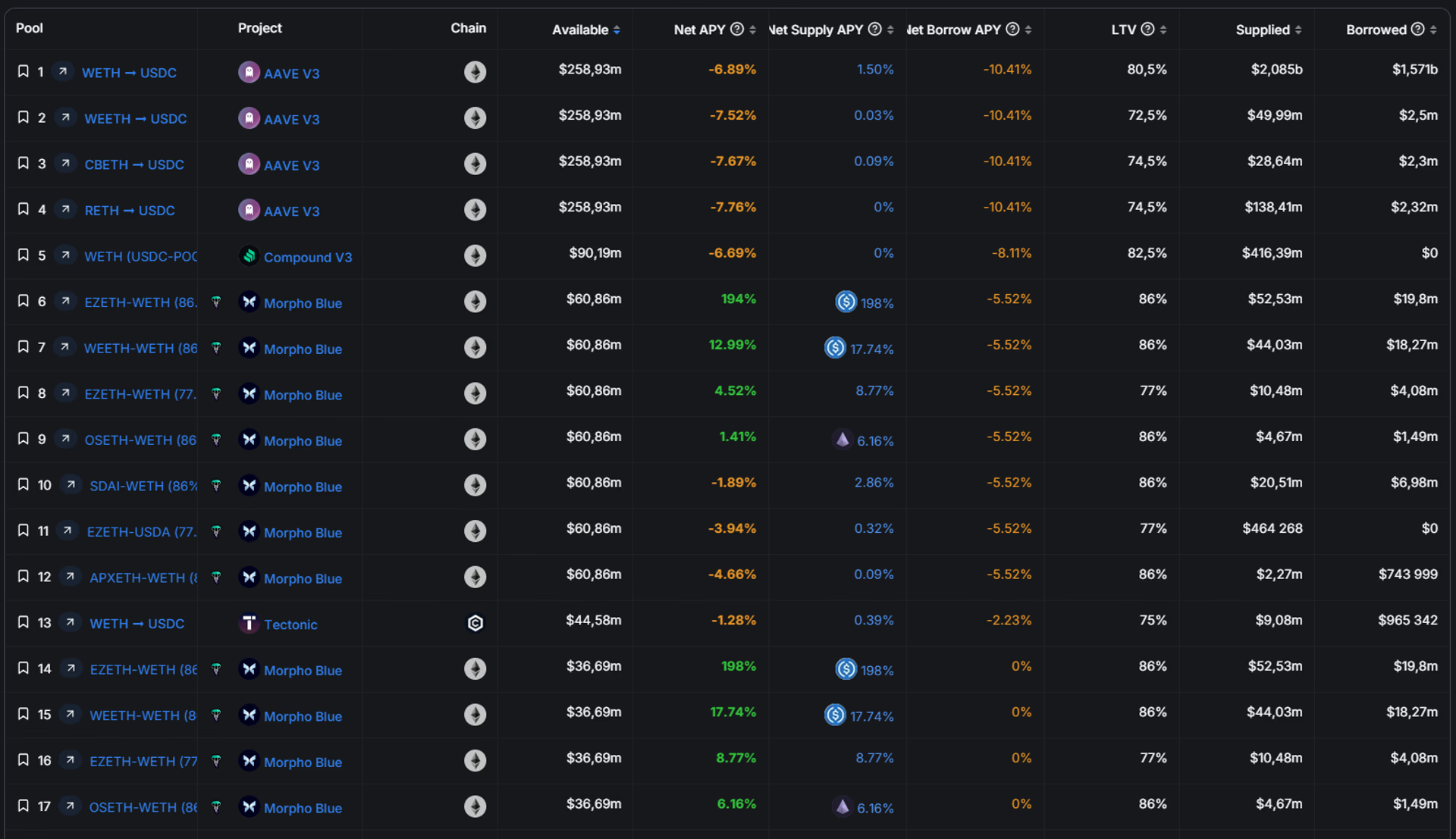
You can borrow crypto from any lending platform listed in such directories, provided it supports the asset, network and collateral type you need. Note that each platform operates on one or more specific blockchains — for example Ethereum, Arbitrum, Base, BNB Chain, Polygon or Tron.
Some lending platforms also support assets on BNB Smart Chain. In this case, users may need a USDT BEP-20 wallet to receive, store or transfer Tether through the BEP-20 network. Before sending funds to any lending platform, always check that the selected USDT network matches the deposit address.
List of Crypto P2P Lending Platforms and DeFi Lending Protocols
Below are platforms where users can get a crypto-backed loan or compare DeFi lending conditions. Keep in mind that interest rates, supported assets, limits, TVL and risk parameters change constantly, so you should check current data in the protocol interface and on analytics services before using any platform.
- Aave — one of the largest DeFi lending protocols. Users supply assets as collateral, borrow supported tokens and monitor their Health Factor to avoid liquidation. Rates are dynamic and depend on the specific market and pool utilization.
- Compound — a popular lending protocol where users provide collateral and borrow the base asset within Compound III markets. Conditions depend on the specific network, collateral factor, liquidation factor and available liquidity.
- SparkLend / Spark — lending infrastructure in the Sky ecosystem connected with borrowing USDS, USDC and other assets. The protocol uses transparent rate and collateral parameters that are determined by governance.
- Morpho — decentralized lending infrastructure with isolated markets where each “collateral asset — loan asset” pair has its own risk parameters, including LLTV.
- Venus — a DeFi lending protocol widely used in the BNB Chain ecosystem. It supports borrowing against collateral, but users must carefully monitor risk parameters and network fees.
- Maple — an institutional and on-chain lending protocol that works differently from classic overcollateralized DeFi pools, so users should study the borrower model, pool terms and risk structure before participating.
- MakerDAO / Sky — historically one of the key DeFi lending and stablecoin projects. In the current context, part of the lending direction is linked to the Sky and Spark ecosystem, so conditions should be checked through the latest official interfaces.
- C.R.E.A.M. Finance — a historical DeFi lending project that was often mentioned among lending protocols. Before using legacy or less active platforms, users should carefully check current liquidity, safety, audits, incident history and the real state of the product.
- dYdX — a project that has been associated with DeFi finance in different periods, but is now primarily known as a decentralized derivatives and perpetuals platform. It is no longer accurate to treat it as a classic crypto-backed lending platform without checking current functionality.
- DeFiner — a project in the non-custodial finance segment. Before using it, users should verify whether the service is currently active, which markets are available, how secure it is and whether real liquidity exists.
- Drops — a niche platform focused on loans against NFTs and other digital assets. Such loans are especially risky because NFT liquidity can fall sharply, and collateral valuation depends heavily on market demand.
What You Need to Get a Crypto Loan
To borrow crypto online, you need:
- a secure crypto wallet for storing and managing your assets;
- crypto assets to use as collateral;
- the native token of the selected network to pay transaction fees;
- an understanding of the loan terms: LTV, rate, liquidation threshold, duration, penalties, protocol fees and network costs.
Benefits of Crypto Lending:
- in DeFi, no credit score or financial history is usually required;
- in decentralized protocols, no paper contracts are required, although the user still accepts smart contract conditions and is responsible for their actions;
- there are no classic banking requirements, while the main limits are set by protocol parameters, collateral size, network and available liquidity;
- users can access liquidity without selling a long-term crypto position.
By borrowing against your assets, you maintain the liquidity of your deposit. You don’t need to sell your crypto and risk missing out on potential gains. However, if the collateral price falls, the same position can become a source of losses through liquidation.
Risks of Crypto Loans
The primary risk is high volatility. If the value of your collateral approaches the loan amount plus accrued interest and the liquidation threshold, your assets may be liquidated automatically and partially or fully transferred to liquidators or the protocol according to the platform rules.
Another risk comes from potential vulnerabilities in smart contracts, oracle errors, incorrect risk parameters or platform backdoors. If a smart contract is hacked, attackers may gain access to locked user funds and steal crypto assets.
There are also risks related to centralized services: account freezes, changed terms, platform bankruptcy, withdrawal delays, regulatory restrictions and conflicts of interest between the user and the lender. Before transferring collateral to a centralized service, study the agreement, jurisdiction, custody model, liquidation terms and withdrawal policy.
Conclusion
This article explained how crypto lending works, its benefits, and the risks of unsecured crypto loans.
Use only trusted wallets and verified lending platforms to safely borrow or lend crypto, protect your assets, and reduce risk while participating in the growing world of decentralized finance.
A crypto-backed loan can be a useful tool for users who want liquidity without selling their assets. But it requires discipline: you need to understand how collateral works, how the rate changes, when liquidation happens, which networks and tokens are used, and who you are actually trusting with your funds — a smart contract, custodian or centralized platform.
FAQ
What is a crypto loan?
A crypto loan is a loan where a user borrows a crypto asset, stablecoin or fiat currency and usually locks cryptocurrency as collateral. In DeFi, the loan is managed by a smart contract; in centralized services, it is managed by the company’s rules and agreement.
Can you get a crypto loan without collateral?
For a long-term DeFi loan, almost never. The main unsecured mechanism is a flash loan, which must be borrowed and repaid within a single transaction. Long-term crypto loan offers without collateral are often associated with a high scam risk.
What is a USDT loan backed by crypto?
It is a loan where the user locks crypto, such as ETH, tokenized BTC or another supported asset, and borrows USDT. While the debt is active, the collateral remains in the protocol or with the lender and may be liquidated if its value falls too much.
What is the difference between a DeFi loan and a centralized crypto loan?
In a DeFi loan, the user interacts with a smart contract and usually does not go through a bank-style credit check. In a centralized crypto loan, a company sets the terms, may require KYC, holds or controls collateral and applies its own liquidation rules.
What are the risks of borrowing against crypto?
The main risks are collateral liquidation, interest rate changes, smart contract hacks, oracle errors, phishing, using the wrong network, high transaction fees and platform risk. Before borrowing, users should calculate LTV and keep a safety buffer.
Where can you borrow crypto with collateral?
You can borrow crypto with collateral through DeFi protocols such as Aave, Compound, SparkLend, Morpho, Venus and other lending platforms, as well as through some centralized services. Always check rates, liquidity, audits, supported networks and liquidation terms before using any platform.